
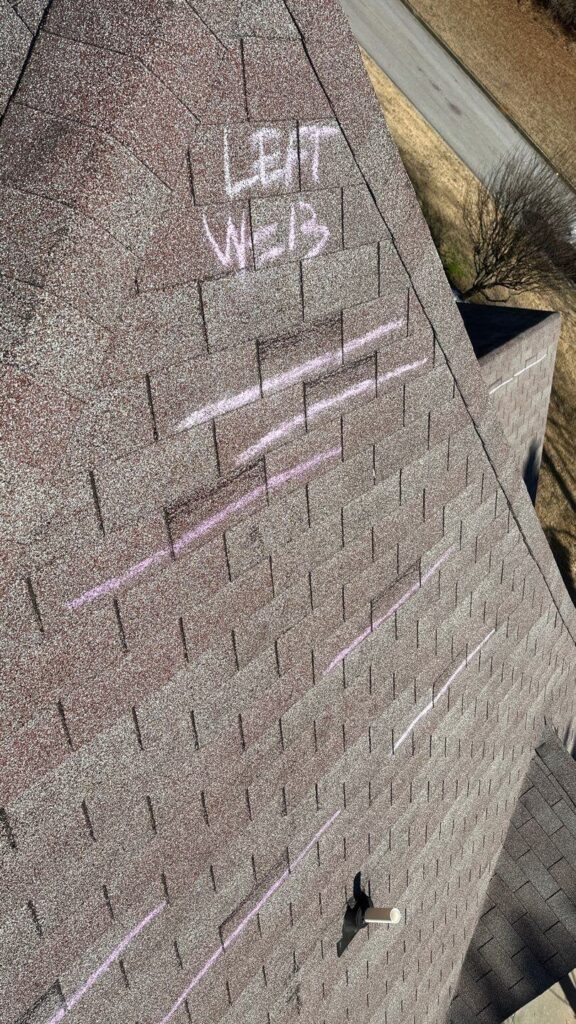
In the aftermath of a storm, your home’s roof might have incurred damage that’s not immediately visible. This post will guide you on what to look out for when evaluating roof damage after a storm.
- Missing Shingles: One of the most obvious signs of roof damage are missing shingles. High winds can easily rip off shingles, leaving your roof vulnerable to leaks.
- Granule Loss: If you find tiny granules in your gutters or around your home’s perimeter after a storm, it could indicate that your shingles have been damaged. These granules protect the shingle’s asphalt coating from UV rays and weathering, so granule loss can accelerate roof aging.
- Dents or Hail Hits on Shingles: Hail can cause dents or hits on your shingles. These might be harder to spot from the ground, but they can crack the shingle mat, leading to leaks over time.
- Leaks Inside Your Home: Water stains on your ceilings or walls often indicate a leaking roof. Check your attic for dampness or visible water after a storm.
- Damaged Flashing: Flashings around vents, chimneys, and skylights can be damaged by high winds. Damaged flashing can allow water to seep into your home.
- Gutter Damage: If your gutters are sagging, dented, or torn from your house, they might not channel water away from your home effectively, which can lead to additional problems.
Remember, safety is paramount – don’t attempt to climb onto a storm-damaged roof yourself. After a storm, it’s always a good idea to call a professional roofing contractor like Supreme Construction Group, for a comprehensive roof inspection. We can assess the damage and provide you with the necessary solutions to keep your home protected.
Stay safe and informed!
I am sure this article has touched all the internet visitors, its
really really good piece of writing on building up new website.